
Everyone wants to earn more money, but changing jobs isn’t always the best or easiest solution. The good news is that there are smart ways to increase your salary without leaving your current company. Whether you’re working in a corporate office, a startup, or a government job, these strategies can help you make more while staying put.
1. Ask for a Raise – But Be Strategic
This may seem obvious, but many people hesitate to ask for a raise. The key is to approach it the right way. Don’t just walk into your manager’s office and say, “I want more money.” Prepare a case.
Start by gathering evidence. List your accomplishments. Highlight how you’ve helped the team or company. Use numbers wherever possible. For example, “I improved system performance by 25%” or “I helped close a deal worth ₹15 lakh.”
Timing also matters. Avoid asking during busy or stressful periods. Aim for a time after a successful project or during annual reviews. If your company has a specific budget cycle, plan ahead.
Practice your pitch. Be confident but not aggressive. Show your value, and let them know you’re committed to growing with the company.
2. Upskill – Become Too Valuable to Ignore
Companies love employees who invest in themselves. If you’ve been doing the same tasks for years, it’s time to learn something new.
Focus on skills that are in demand in your industry. For example, if you’re in marketing, learn SEO or data analytics. If you’re in software development, explore DevOps, AI, or cloud platforms.
You don’t have to go back to school. Online platforms like Coursera, Udemy, and LinkedIn Learning offer affordable courses. Many of them are self-paced.
Once you gain a new skill, showcase it. Use it at work. Offer to take on a project using your new expertise. This shows initiative and increases your chances of earning a raise or bonus.
You could even propose a new role or title that aligns with your upgraded skills—like “Data Analyst” or “Cloud Specialist.” Titles can lead to salary bumps.
3. Take on More Responsibility
Another powerful strategy is to voluntarily take on more responsibility. This doesn’t mean doing someone else’s job for free. It means identifying areas where you can contribute more strategically.
Maybe your team lacks documentation, or there’s no one managing client feedback. Step in and fill that gap.
Becoming the “go-to” person builds trust and visibility. Over time, management will start to rely on you. This opens doors to leadership roles, which almost always come with better pay.
Just make sure you’re not being taken advantage of. Set boundaries, and once you’ve added value, use that as leverage in salary discussions.
4. Negotiate Perks and Benefits
Sometimes a “salary hike” isn’t just about money. You can negotiate perks that indirectly increase your earnings or improve your quality of life.
Think about benefits like:
- Work-from-home flexibility (saves commuting time and cost)
- Meal allowances or lunch reimbursements
- Upskilling reimbursements or paid certifications
- Paid time off or mental health days
- Health insurance upgrades
These might not increase your bank balance immediately, but they can reduce your expenses and improve your well-being. That’s value.
Also, some companies offer performance bonuses or profit-sharing. Explore whether you’re eligible or can be included in these plans.
5. Build Strong Relationships with Key People
Your work is important, but your network inside the company is just as valuable. People don’t always get promoted or paid more just because they’re excellent at what they do. Visibility matters.
Build relationships with managers, team leads, and cross-functional colleagues. Attend optional meetings. Offer to help on cross-team projects. Participate in company events or initiatives.
When decision-makers know who you are and trust your work, you’re more likely to be considered for raises, promotions, or special projects.
Don’t be fake or political—just be helpful, consistent, and present. A good internal reputation can quietly open big doors.
Bonus Tip: Track Your Achievements Regularly
Keep a running document of your work highlights. This could be a Google Doc, a Notion page, or a simple journal.
Record metrics, client feedback, wins, and improvements you made. When it’s time to talk about a raise or promotion, you won’t be scrambling for evidence—you’ll have it ready.
The following infographic clearly shows all the key steps to increase your salary without changing job: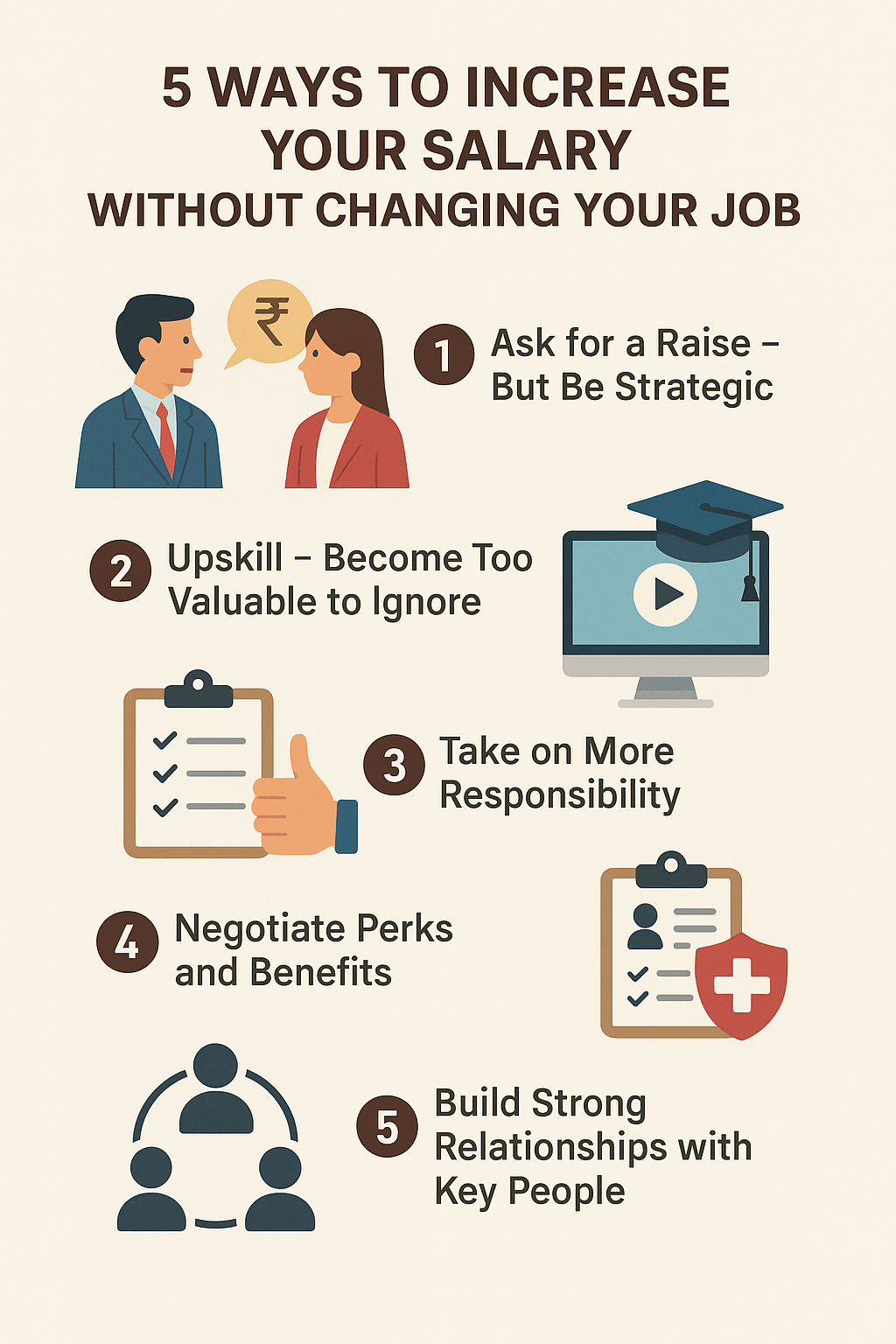
Final Thoughts
Increasing your salary without changing jobs takes patience, planning, and persistence. It’s about showing your value clearly and making it hard for your employer to ignore your contributions.
You don’t need to make loud announcements or demands. Just take steady steps. Learn more, do more, and show more. Your results will speak for themselves—and your paycheck will eventually follow.
So before you start updating your resume or applying elsewhere, try these five strategies first. You might be surprised at what’s possible when you grow where you’re planted.