
Asking for a promotion to a managerial position is a big step in your career. It shows that you’re ready to take on more responsibility, lead others, and influence the direction of your team or company. But it’s not always easy. Timing, approach, and preparation matter a lot.
In this article, we’ll explore 5 well-thought-out and respectful ways to ask for a promotion to manager. Each method focuses on preparation, communication, and follow-up. These tips will help you make a confident case for your next big move.
The following infographic shows the 5 ways clearly: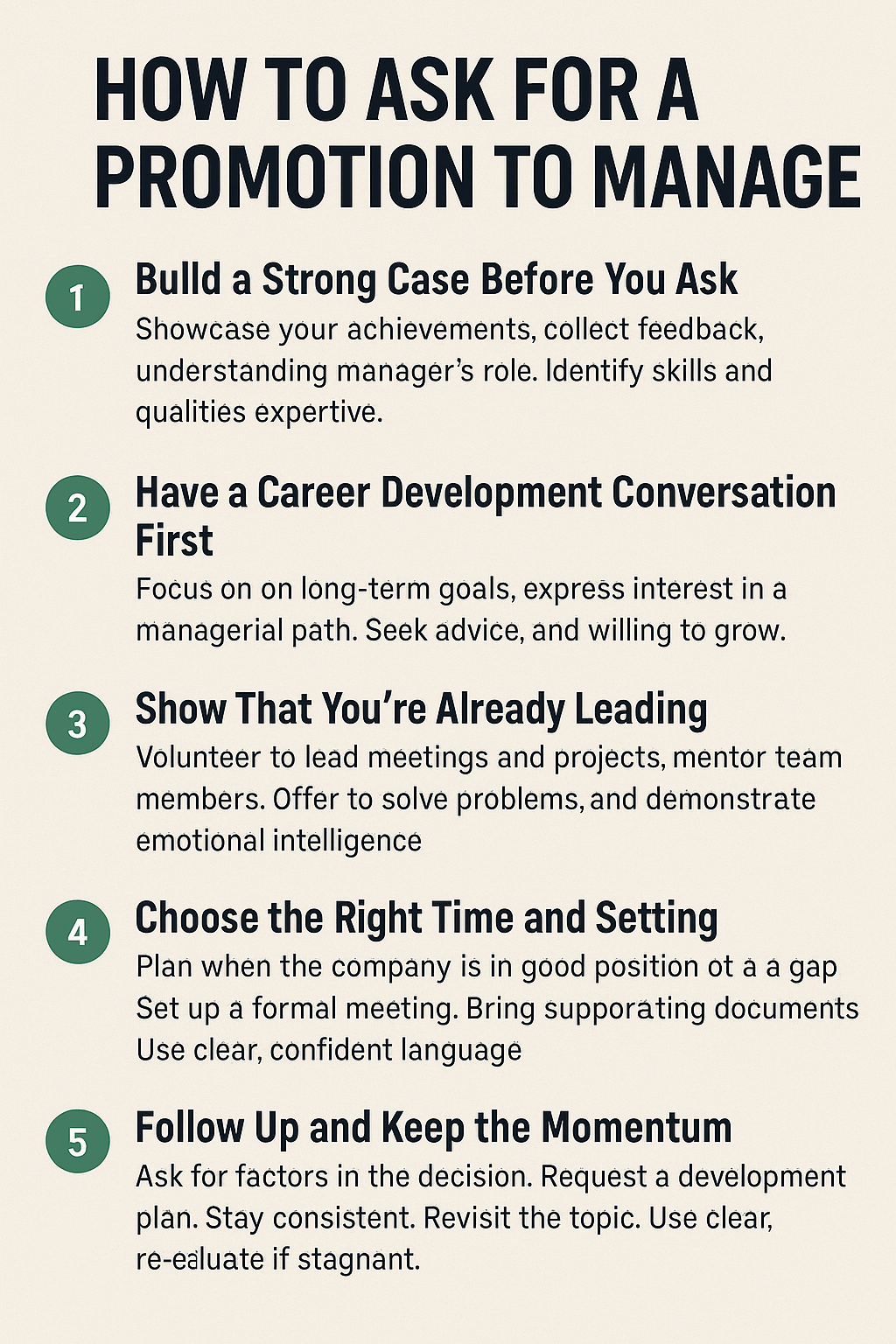
1. Build a Strong Case Before You Ask
Before you even think of asking for a promotion, build your case. Management is not just about doing your current job well—it’s about showing that you’re already thinking and acting like a manager.
- Start by tracking your achievements. Keep a record of the impact you’ve made. Have you saved the company money? Improved processes? Mentored team members?
- Collect data that shows how you’ve gone beyond your job description. For example, maybe you’ve led a project successfully or stepped in during a leadership gap.
- Talk to peers or stakeholders and collect feedback. A few solid endorsements can add weight to your ask.
- Understand what the role of “Manager” actually entails in your organization. Read the job description or observe people currently in that role.
- Identify the skills and qualities expected in a manager, and show how you already demonstrate them: leadership, problem-solving, initiative, and communication.
Once you’ve documented all of this, you have a strong foundation for your conversation.
2. Have a Career Development Conversation First
Instead of walking in and asking for a promotion right away, start with a career growth conversation. This is a softer, more strategic entry point.
- Ask your manager for a one-on-one focused on your long-term goals.
- Use this meeting to express interest in growing within the company, especially into a management role.
- Say something like, “I’ve been thinking about where I can contribute most in the next phase of my career, and I’m very interested in a managerial path. I’d like your thoughts on how I can work toward that.”
This shows that you’re not demanding anything—you’re seeking advice and are willing to grow. It also gives your manager a chance to guide you or identify gaps you can work on.
From here, you can work with your manager to set expectations, timelines, and goals that move you closer to the promotion. This makes it a collaborative journey, not a sudden demand.
3. Show That You’re Already Leading
Actions speak louder than words. If you want to be a manager, start acting like one—even without the title.
- Volunteer to lead meetings, train new employees, or manage small projects.
- Offer to mentor junior team members or interns. This demonstrates leadership and patience—two must-have traits for any manager.
- Be the person people turn to when they’re stuck. Help solve problems even if they’re outside your direct responsibilities.
- Use every opportunity to demonstrate emotional intelligence. Managers need to stay calm under pressure and resolve conflicts fairly.
Once you’ve built a track record of leadership behavior, it becomes easier to argue that you’re ready for the formal title.
When you eventually ask for the promotion, you can say, “Over the past few months, I’ve taken on leadership roles by doing X, Y, and Z. I’d like to explore how I can transition into a formal managerial role.”
4. Choose the Right Time and Setting
Timing matters. Asking for a promotion during a chaotic period, budget cuts, or performance downturn may reduce your chances. Plan your ask carefully.
- Consider the company’s performance cycle. Annual review time or strategic planning seasons can be good moments to ask.
- If your company recently expanded or a manager has left, it may be an ideal opportunity to step in.
- Set up a formal meeting rather than bringing it up casually. This shows respect and seriousness.
- Be prepared with documents: your achievements list, peer feedback, and even a one-page proposal for how you’ll handle the manager role.
Use clear, confident language. For example: “Based on the progress I’ve made and the additional responsibilities I’ve taken on, I’d like to formally be considered for a promotion to manager. I believe I’m ready to lead, and I’m excited about contributing even more in that capacity.”
5. Follow Up and Keep the Momentum
If you don’t get a ‘yes’ immediately, don’t lose heart. Sometimes, the answer is “not now” rather than “no.”
- Ask what the decision factors were. Get clarity on what’s missing and how you can fill the gap.
- Request a development plan from your manager. This could include training, shadowing opportunities, or specific performance goals.
- Stay consistent. Keep showing leadership qualities and updating your manager on progress.
- Follow up every 2–3 months to revisit the topic and keep the dialogue alive.
- If things stagnate with no clear path, it’s okay to re-evaluate. Are there growth opportunities elsewhere in the company—or even outside it?
By staying persistent but professional, you show that you’re serious about growth and that you respect the organization’s pace.
Final Thoughts
Asking for a promotion to manager is not just about asking—it’s about showing. Show leadership, initiative, and maturity. Then, when you ask, your words carry real weight.
Keep in mind: promotions are earned, not handed out. Be strategic, prepared, and patient. Whether the answer is a yes or a “not yet,” the process will help you grow either way.
Above all, believe in your readiness. If you can see yourself as a manager and you’re doing the work, your leadership journey has already begun.