
Saying “no” at work can feel risky. You want to be helpful, supportive, and seen as a team player. But sometimes, saying yes to everything leads to stress, burnout, and poor results. The truth is — learning to say no politely is one of the most powerful workplace skills you can build.
Why It’s Hard to Say No
Most of us struggle to say no for emotional reasons. We don’t want to disappoint people. We fear missing opportunities or being seen as lazy. Sometimes, it’s about authority — we feel we can’t say no to our boss. These feelings are normal, but if you never set boundaries, you’ll end up overwhelmed.
Think about this: every “yes” you give means saying “no” to something else — maybe your focus, your peace of mind, or your personal time.
When You Should Say No
There’s a difference between being helpful and being overloaded. You should consider saying no when:
- You’re already stretched thin with your current workload.
- The new request doesn’t align with your goals or role.
- You’re asked to fix someone else’s repeated mistakes.
- You’re given an unrealistic deadline.
- You’re asked to do something unethical or outside your responsibility.
Saying no doesn’t make you uncooperative — it means you’re aware of your limits. Boundaries protect both your productivity and your mental health.
How to Say No Politely
Let’s go step by step on how to refuse a request respectfully.
1. Pause Before You Answer
You don’t need to respond immediately. Take a moment. Say something like:
“Let me check my schedule and get back to you.”
This gives you time to think clearly and avoid agreeing on impulse.
2. Be Honest and Brief
You don’t owe long explanations. A short, clear reason is enough. For example:
“I’d love to help, but I’m at full capacity this week.”
“That’s not in my area, and I want to make sure it gets the right attention.”
3. Offer an Alternative
If possible, suggest another solution. You can say:
“I can’t take this now, but I can review it next week.”
“Maybe Alex can help since he’s handled similar tasks.”
This shows you’re cooperative without sacrificing your bandwidth.
4. Keep a Positive Tone
Use a friendly and calm tone. Avoid defensive language. The goal is to communicate boundaries, not rejection. You can stay polite while being firm.
5. Stand by Your Decision
Once you’ve said no, don’t overexplain or backtrack. Some people may push back. Stay calm and repeat your message if needed.
“I understand it’s urgent, but I really can’t take it on right now.”
Examples of Saying No at Work
Here are some real-world examples:
- When your boss gives extra work:
“I can do that, but it’ll delay my current project. Which one should I prioritize?” - When a coworker asks for help too often:
“I wish I could, but I have my own deadlines today.” - When you’re asked to stay late:
“I can’t stay today, but I can handle it first thing tomorrow morning.” - When it’s not your responsibility:
“That falls under the marketing team. You might want to loop them in.”
Tips to Build Confidence in Saying No
1. Know Your Priorities
Be clear about your goals and workload. When you know what matters most, it becomes easier to turn down low-priority tasks.
2. Use Assertive Body Language
Maintain eye contact, sit or stand straight, and keep your voice steady. Your confidence communicates that your decision is reasonable.
3. Practice with Small No’s
If you find it hard, start small. Practice saying no to minor requests first. Gradually, it will feel more natural.
4. Separate Guilt from Responsibility
It’s not your job to make everyone happy. Your job is to do your best work — and that requires managing your time wisely. Learn to be kind but firm.
5. Learn from Role Models
Observe how confident people at your workplace handle requests. Notice their tone and phrasing. They often say no respectfully without apologizing too much.
The following info graphic shows the steps clearly: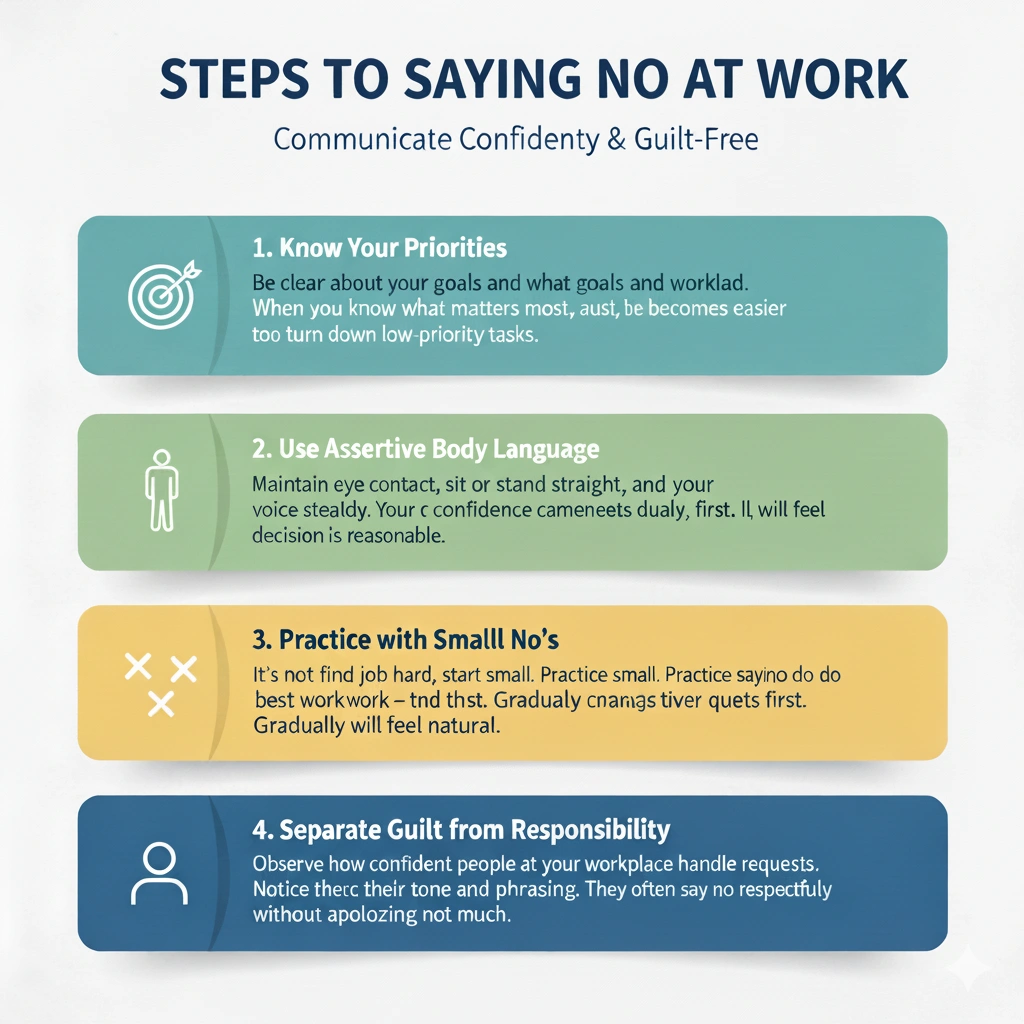
What Not to Do When Saying No
- Don’t lie to escape. It might backfire later.
- Don’t apologize excessively — it weakens your message.
- Don’t overpromise. You’ll only stress yourself out.
- Don’t ignore the request. Always reply respectfully.
How Saying No Improves Your Career
When you say no wisely, you create space for quality work and personal growth. It builds respect because colleagues see you value your time. Managers often appreciate honest communication over blind agreement.
You also prevent burnout. According to a WHO report on burnout, long-term stress at work can cause exhaustion, reduced effectiveness, and detachment. Setting boundaries is not selfish — it’s self-preservation.
Using “No” Strategically
You don’t have to say no to everything. Use it as a filter to focus on what truly matters. For example, saying no to low-impact meetings allows you to spend time on creative or high-value tasks.
This is a form of time management. It’s about controlling your schedule before it controls you.
Sample Templates You Can Use
Here are ready-to-use lines for different situations:
- “I’m focusing on X right now, so I won’t be able to take Y.”
- “I’d love to, but I don’t have bandwidth this week.”
- “Let’s revisit this next sprint; I have no room at the moment.”
- “I appreciate you thinking of me, but I’m not the right fit for this.”
Notice that all of these are polite yet firm. They show respect for both your time and the requester’s needs.
Handling Guilt After Saying No
Feeling guilty is common. You might wonder if you disappointed someone. But remember: you’re protecting your focus and energy. When you prioritize your well-being, you perform better and stay motivated longer.
It might help to reflect on how many times saying “yes” made you overwork or feel resentful. Over time, you’ll realize that saying no is not rejection — it’s responsibility.
Conclusion
Saying no at work isn’t about being difficult — it’s about being deliberate. It’s about choosing quality over quantity. When you draw clear lines, people respect you more because you respect yourself.
So next time someone asks, pause, breathe, and assess. If it doesn’t align with your goals or capacity, say no — kindly but confidently. You’re not shutting the door; you’re managing your time wisely.
Remember, the most successful professionals don’t say yes to everything. They say yes to what truly matters.
For more on workplace communication, check out Harvard Business Review’s Communication Tips.